
Making a Better World, 50 Cents at a Time
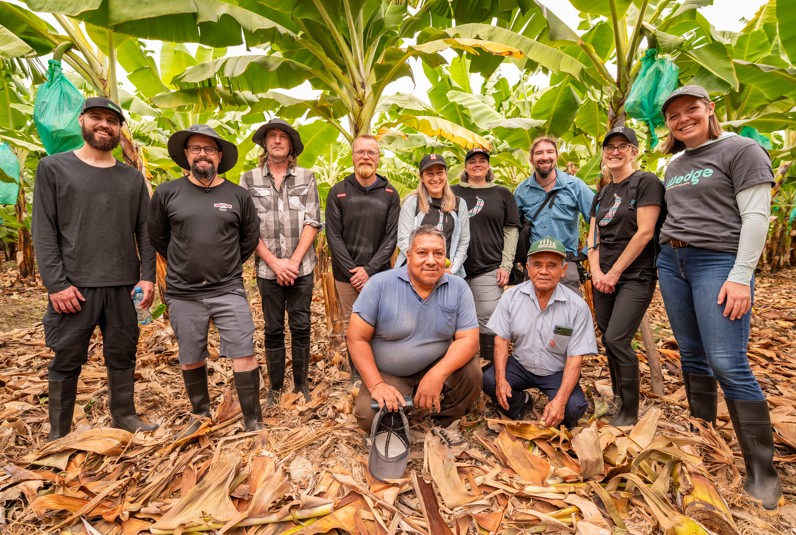
At the co-op, we know many of the farmers and growers who raise the locally grown food we sell. From local produce growers, like Twin Organics, to local ranchers, like Peterson Craftsman Meats, our team has visited the farms, spoken to the farmers about their practices, seen them in action, and learned about their challenges and inspirations.
We recently were able to take that one step farther – much farther – with a trip to Peru to see how our bananas are grown! David Giedd, produce category manager, traveled with Equal Exchange and other local co-op staff. He was able to talk with banana farmers and see firsthand their practices, including being part of a cooperative business model, choosing sustainable practices, and giving back to community.
Cooperative Impact
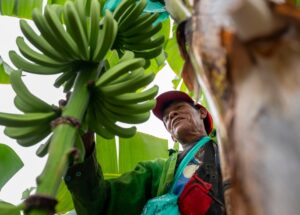
One thing that struck David was the small size of the farms. Most of the banana industry is controlled by a few large corporations, but not here. “The banana farms are very small family farms,” says David. “Some of them are less than an acre. But they work together to collaborate and aggregate enough for the supply stream. It’s the opposite of conventional bananas [run by corporations] that are monoculture, use pesticides, waste water, and have exploitative labor practices.”
In Peru, David saw how the farmers collaborate and make group decisions. “People advocate for themselves through these cooperative structures in ways that are very resilient and very intelligent and lots of hard work,” says David. “Most of the world is aligned against them, but not us.”
Environmental Impact
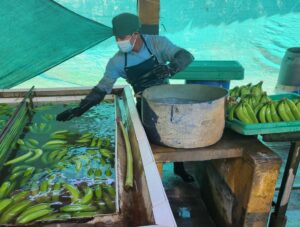
The banana cooperatives allow farmers to make decisions with an eye to sustainability. “Every banana plant has a plastic bag associated with it,” says David. The plastic bags help protect bananas against pests, minimize damage from too much sun or wind, and help trap humidity to reduce the need for irrigation. “They have a recycling program where the bags are collected and used to build the corner guards for pallets that transport the bananas. So they’ve built themselves an adjacent industry that makes them more autonomous and resilient, it’s cheaper for them, and it’s a recycling program.”
Farmers also have a major impact on water. These banana farms are located in a high desert region that is dry and dusty (David says it reminds him of New Mexico), so water resources are scarce and precious. The farmers all follow best practices that conserve water, and when the local reservoir is low, they water plants as minimally as possible.
Bananas are also facing a huge challenge: fungus blight. The small-scale farmers in Peru are working together to invest in research to develop bananas that are resistant to the blight, with the ultimate goal of having bananas that are immune.
Societal Impact
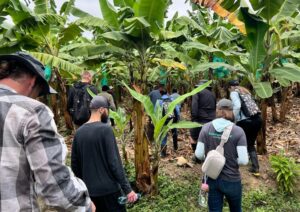
Bananas from Equal Exchange cost perhaps 50 or 60 cents more per pound than those that are conventionally grown. But that relatively small cost difference has a massive impact on the farmers, their families, and their communities.
“Conventional bananas [end up with] money going toward a transnational corporation, probably owned by another corporation that benefits a few shareholders who aren’t involved in the production and don’t live in those places, they’re not part of the communities,” says David. The comparison between those conventional bananas and the ones from Equal Exchange is vast.
“Based on the Fair Trade premium, [the farmers are] able to fund projects that include infrastructure, health care, and agricultural research,” says David. “They couldn’t have done that without that premium. They’re able to provide health care for the co-op members and people who work for the co-op, including regular checkups.”
David talked to farmers who are in their 70s or 80s and never went to high school. But now, thanks to Equal Exchange and Fair Trade premiums, they’re seeing a slow growth of incremental, communal wealth and well-being in their communities, with better roads, small hospitals, and other infrastructure. Those farmers now have grandchildren who are able to dream of and plan to go to college.
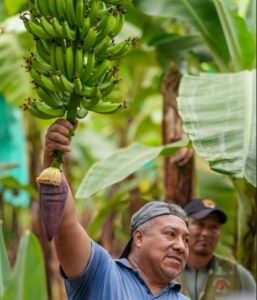
“I made the choice a decade ago to bring Equal Exchange bananas and avocados to the co-op, and understood professionally what that meant,” says David. “But now I understand the emotional side. We all know the effect that our decisions have on the world, and that if we can come together and cooperate toward making better decisions together, we can actually have an impact on real people.”
David also has immense appreciation for the team from Equal Exchange who connects co-ops with these small-scale farmer cooperatives. “The Jessies and Lynseys [on the Equal Exchange team] have that one-two punch of intelligence and love for the work — they get [a lot] done and are doing very meaningful, important work.”
David’s final words are to reiterate the huge difference it makes when choosing Equal Exchange produce over conventional options at other grocers. You might be spending an extra 50 or 60 cents, but the impact is vast. “Know that by spending a bit more if you’re able, you’re sending kids to college, building roads, hospitals, and schools. It’s an easy decision that truly helps people.”
Discover other ways that your dollars have an impact with our article The Good You Help Grow.